
UK Fires and Extreme Heat: A Timely Reminder on Fire Safety


As the UK experiences another spell of exceptionally hot and dry weather, fire and rescue services across the country have faced a demanding few days.
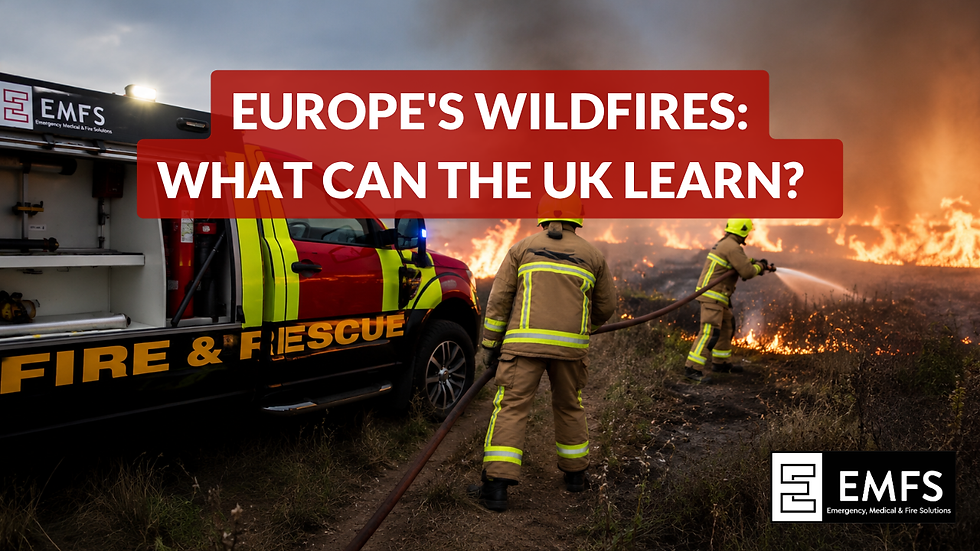
Over the weekend and into the start of this week, a number of significant fires have been reported across the UK, including a major fire at a recycling facility in Milton Keynes, a warehouse fire in St Albans that resulted in the closure of the M25, commercial fires in Hemel Hempstead, a grass fire in Stoke-on-Trent and a significant woodland and heathland fire in the New Forest.
The Met Office has now issued an amber Extreme Heat warning covering parts of southern and eastern England and the Midlands for Thursday 13 August, with temperatures potentially reaching around 37°C in some areas.
These incidents deserve to be treated with care.
We do not know the full circumstances behind each fire, what caused them or what fire safety measures were in place at the locations involved. It would therefore be inappropriate to use any of these incidents to suggest that a particular organisation failed to meet its responsibilities.
What they do provide is an important opportunity to step back and consider something that applies to every business, property and organisation:
Fire safety is not about assuming a fire will never happen. It is about being prepared for the possibility that it might.

What has been happening?
Among the significant incidents reported publicly in recent days are:
Milton Keynes
A fire at a recycling facility in Chesney Wold, Bleak Hall, involved an estimated 50 to 100 tonnes of waste. Six fire engines attended, with crews remaining on site to deal with hotspots, turn over waste materials and monitor conditions.
St Albans
A large warehouse fire at Ventura Park in Colney Street resulted in the M25 being closed in both directions between junctions 21A and 22. Emergency services warned of smoke and debris affecting the carriageway, alongside a potential risk of secondary explosions.
Hemel Hempstead
Several commercial outbuildings were reported to be alight, with firefighters supported by a neighbouring fire and rescue service.
Stoke-on-Trent
Fire crews dealt with a grass fire covering approximately one hectare, working through the night to extinguish remaining hotspots.
New Forest
A significant fire affected woodland and heathland in the New Forest, with crews working for several hours in challenging conditions. Dry peat and vegetation can be particularly difficult to extinguish and can allow fires to continue burning beneath the surface.
These incidents are different in nature, location and circumstances. Their causes and the full consequences of each remain matters for the relevant authorities to establish.
The important point is not that they share a single cause.
It is that they have occurred during an exceptionally dry period when the consequences of a fire can be particularly difficult to manage.

Why does the current weather matter?
The current conditions provide an important backdrop.
July 2026 was exceptionally dry, with England experiencing record levels of dryness and widespread drought conditions. Around three-quarters of England is now reported to be in drought, while the Met Office has warned of another period of very high temperatures this week.
Hot, dry conditions can create additional challenges for fire management.
Vegetation dries out. Open land becomes more vulnerable to fire. Waste and stored materials can present different risks depending on their composition and condition. Dry vegetation around buildings and sites can provide a pathway for fire to spread.
None of this means that hot weather automatically causes a fire.
But it does mean that organisations should understand how changing environmental conditions interact with the risks already present on their site.
And that is where good fire safety planning matters.
Even the best fire safety measures cannot guarantee a fire will never happen
This is an important distinction. Effective fire safety is not a guarantee that an incident will never occur.
Accidents happen. Equipment can fail. Human error can occur. Unexpected circumstances can develop. A fire can start despite an organisation having taken significant precautions.
The purpose of effective fire safety is to make sure that when something does go wrong, the organisation is in the strongest possible position to respond.
That means understanding the risks.
It means having appropriate detection and warning systems.
It means ensuring firefighting equipment is suitable, accessible and maintained.
It means having clear emergency procedures.
It means making sure people know what to do.
And it means reviewing those arrangements when circumstances change.
When was your fire risk assessment last reviewed?
For businesses, landlords, property managers and other organisations, periods of unusual weather can be a useful prompt to look again at existing arrangements.
Ask yourself:
Are the risks on our site still accurately reflected in our fire risk assessment?
Are our fire detection and alarm systems appropriate and maintained?
Is our firefighting equipment suitable for the materials and activities present?
Are escape routes and emergency procedures still appropriate?
Do our staff know what to do if a fire occurs?
Have changes to our building, storage, equipment, occupancy or operations introduced new risks?
These are not questions that should only be asked during an annual compliance exercise.
Fire risk is not static.
Buildings change. Businesses change. Materials change. Processes change. Occupancy changes. The surrounding environment changes.
Your fire safety arrangements need to keep pace.

Fire safety is about preparation, not prediction
Nobody can predict exactly when a fire will occur.
What organisations can do is make sure they have considered the possibility and are prepared to respond.
A good fire safety strategy should help reduce the likelihood of a fire starting, provide early warning if one does occur, support safe evacuation and help limit the potential consequences.
That becomes even more important when external conditions create additional challenges.
The recent incidents across the UK are therefore not an opportunity to speculate about what individual organisations should or should not have done.
They are a reminder to all of us that fire remains an unpredictable risk, and preparation matters.
How EMFS Group can help
At EMFS Group, fire safety and compliance are core areas of our work.
We support organisations with fire risk assessments, fire safety training and ongoing compliance support, helping businesses and property owners keep their arrangements aligned with the risks they actually face.
Our approach is not about assuming that an organisation's existing arrangements are inadequate.
In many cases, the organisations we work with already take fire safety seriously and have established procedures in place.
Sometimes what is needed is a fresh perspective.
An experienced second opinion.
A review following changes to a building or business.
Or practical support in keeping fire safety arrangements current as circumstances evolve.
We also provide digital support to help organisations keep fire risk assessments under review, rather than treating them as a document that is completed once and then forgotten.
Fire safety is not about believing a fire will never happen.
It is about being as prepared as possible when it does.
If you would like to review your current fire safety arrangements or discuss where your organisation currently stands book a Discovery Call with the EMFS Group team.
CQC Registered | BAFE Accredited | ISO 9001 | ISO 45001 | ISO 14001


Comments